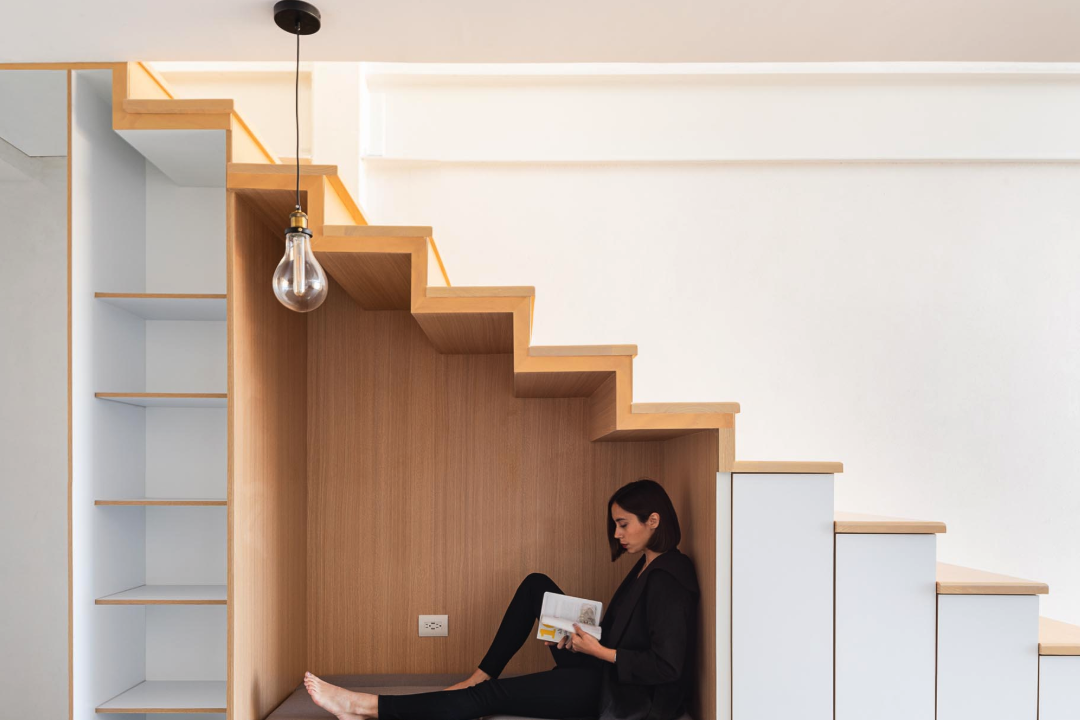
So, you’re looking to light up that cozy under-stairs nook for your reading chair, huh? Great idea! The best lighting for this spot is typically a combination of ambient and task lighting, designed to be warm, dimmable, and focused where you need it most. We’re talking about creating a little personal sanctuary, not a brightly lit interrogation room. Think about how you want to feel in that space, and let that guide your choices.
An under-stairs nook isn’t your average room. It’s often enclosed, can be a bit darker than other areas, and sometimes has unusual angles. These quirks are what make it cozy, but they also mean you can’t just slap up a standard ceiling light Ecochome and call it a day.
The Challenge of Shadows and Enclosure
Because it’s tucked away, your nook is prone to shadows, especially right where you want to be reading. Overhead lighting alone might not cut it, as your own head or the back of your chair could cast a shadow over your book. The enclosed nature also means light can feel trapped, so you want to avoid anything too harsh that could create glare or an uncomfortable brightness.
Maximizing a Small Space
Every inch counts in a small nook. This means thinking about lighting fixtures that are functional without being bulky or intrusive. Wall-mounted options, slim floor lamps, or even integrated lighting can be fantastic choices to save precious floor space.
The Power of Warmth and Dimmability
This isn’t a functional hallway; it’s a reading retreat. Warm-toned lighting (think 2700K to 3000K on the Kelvin scale) will create that inviting, relaxed atmosphere you’re after. And dimmability? Non-negotiable. Sometimes you want a soft glow, other times you need a bit more brightness for those tiny print books. Being able to adjust the light level is key to true comfort and versatility.
Essential Lighting Layers for Your Reading Nook
To achieve that perfect balance of ambiance and functionality, we’re going to think in layers. Just like a well-dressed outfit, good lighting is about combining different elements.
Ambient Lighting: Setting the Mood
This is your general, background light. It’s not meant to be super bright; instead, it provides an overall soft glow that makes the space feel welcoming and prevents stark contrasts between the lit area and the surrounding darkness.
Integrated LED Strips
These are fantastic for discreet ambient lighting. You can tuck them along the top edge of a built-in shelf, under a small ceiling overhang, or even along the baseboards if you have a platform. They offer a continuous, even wash of light and are often dimmable. Look for kits that are easy to install yourself if you’re handy.
Small Sconces or Wall Washers
If you have exposed walls, a couple of small, upward or downward-facing sconces can provide a gentle ambient glow without taking up floor space. Wall washers, which direct light across a surface, can be particularly effective in making a small space feel larger and brighter without creating direct glare.
Recessed Lighting (If Practical)
If your under-stairs area has a built-in ceiling or a sufficient cavity, a single, small recessed light with a wide beam spread and a warm temperature can serve as subtle ambient lighting. Just make sure it’s not directly overhead your reading spot, as that can create shadows.
Task Lighting: Illuminating Your Page
This is where the magic happens for reading. Task lighting is direct, focused light specifically designed to illuminate your book or e-reader without spilling too much light elsewhere.
Adjustable Floor Lamps
A classic choice for a reason. Look for a slim floor lamp with an adjustable arm and head, so you can direct the light exactly where you need it. A shade that directs light downwards is crucial to prevent glare. Consider models with a small footprint or an arc design that can reach over your chair.
Wall-Mounted Reading Lights
These are brilliant for saving space. They can be installed directly above or beside your reading chair, often featuring an adjustable arm or gooseneck for precise positioning. Many come with integrated LED bulbs and some even have USB charging ports – a nice bonus for your phone or e-reader.
Clip-On Lamps
If you have a sturdy shelf or even the back of your reading chair, a good quality clip-on lamp can be a surprisingly effective and versatile option. Look for models with a focused beam and a solid clip that won’t wobble. This is a great temporary or flexible solution.
Accent Lighting: Adding Character (Optional)
Accent lighting isn’t strictly necessary for reading, but it can add a lovely touch of personality and visual interest to your nook. It highlights specific features or objects, making the space feel more curated.
Small Display Spotlights
If you have a built-in shelf with a few decorative items, a tiny, low-wattage spotlight can draw attention to them. This creates depth and makes the nook feel more thoughtfully designed.
Backlighting for Shelves
Similar to LED strips for ambient lighting, small strips or puck lights tucked behind books or objects on a shelf can create a soft glow and highlight the contents without being directly visible.
Battery-Operated Lanterns or Fairy Lights
For a truly whimsical and temporary accent, a small battery-operated lantern or a string of warm fairy lights can add a magical touch. Just be mindful of clutter in a small space.
Choosing the Right Bulbs and Fixtures
Beyond the type of lighting, the actual bulbs and fixtures you choose will significantly impact the look and feel of your nook.
LED is Your Best Friend
Seriously, LED bulbs are the way to go. They’re energy-efficient, last ages, don’t get hot (important in a small, enclosed space), and offer a huge range of color temperatures and dimmability options.
Color Temperature (Kelvin Scale)
As mentioned, aim for 2700K to 3000K for a warm, inviting glow. Anything higher starts to feel clinical and less cozy. Some smart bulbs even let you adjust the color temperature, offering ultimate flexibility.
Lumens (Brightness)
Don’t get too hung up on lumens for ambient lighting in a small nook. For task lighting, you’ll want enough brightness to read comfortably, but avoid overkill. A good adjustable task light will allow you to find your sweet spot.
CRI (Color Rendering Index)
A higher CRI (90+) means colors will appear more true to life. While not critical for a reading nook, it’s a nice bonus, especially if you’re looking at colorful book covers or artwork.
Fixture Styles and Materials
The style of your fixtures should complement your reading chair and the overall aesthetic of your home.
Minimalist and Slim Designs
In a small nook, sleek and unobtrusive fixtures are often best. Think thin metal, clean lines, and materials that don’t add visual bulk.
Natural Materials
Wood, linen, or woven materials can add warmth and texture, making the nook feel even cozier and more inviting.
Integrated Designs
If you’re building out the nook or have some carpentry skills, consider fixtures that are built directly into shelves, walls, or even the ceiling for a truly seamless look.
Placement and Practical Considerations
Where you put your lights is just as important as what kind of lights you choose. Thoughtful placement makes all the difference.
Task Light Positioning for Optimal Reading
Your task light needs to be positioned so that the light source is not directly in your line of sight when you’re reading, and it shouldn’t cast shadows from your head or hands onto your book.
Over Your Shoulder
Often, placing an adjustable floor lamp slightly behind and to the side of your dominant reading shoulder (e.g., right side if you’re right-handed) works well. The light comes in at an angle, illuminating the page without glare.
Above and Slightly Forward
For wall-mounted lights, aim for a position slightly above your head height when seated, and just a bit forward, pointing down towards your lap/book. This helps avoid reflections if you’re reading on a glossy surface.
Avoiding Direct Glare
No matter the placement, always test it out while sitting in your chair. Move the light around until you find the spot where the page is brightly lit, but the bulb itself isn’t shining directly into your eyes.
Wiring and Power Access
This is the practical, less exciting part, but absolutely crucial.
Existing Outlets
Do you have an outlet nearby? If not, you might need an extension cord (make sure it’s safely tucked away and not a trip hazard) or consider battery-operated options.
Professional Installation
For built-in lighting or if you need new outlets installed, it’s always best to consult or hire a qualified electrician. Don’t mess with electrical work if you’re not confident. Safety first!
Smart Home Integration
Consider smart plugs for your lamps or smart bulbs. This allows you to control the lighting with your voice or an app, and even set schedules – a nice convenience, especially if the switch is in an awkward spot.
Switches and Controls
Think about how you’ll turn the lights on and off.
Dimmer Switches
For hardwired lights (like sconces or recessed lights), a wall-mounted dimmer switch is ideal. For plug-in lamps, look for models with an in-line dimmer switch or use a smart plug with dimming capabilities.
Proximity to Your Chair
Ideally, the switch should be within easy reach of your reading chair. You don’t want to have to get up every time you want to adjust the light.
Bringing It All Together: A Few Scenarios
Let’s look at how these elements might combine in practice.
The “Cozy Minimalist” Nook
Imagine a sleek, low-profile reading chair.
- Ambient: A thin LED strip tucked along the top edge of a built-in shelf above the chair, casting a soft, warm glow upwards.
- Task: A modern, slim-line wall-mounted lamp with an adjustable arm, installed just to the side of the chair, aiming downwards. It has a built-in dimmer.
- Accent: Perhaps nothing, letting the clean lines and materials speak for themselves, or a single small battery-operated puck light highlighting a framed piece of art on the wall.
The “Traditional Comfort” Nook
Picture an upholstered armchair with a throw blanket.
- Ambient: Two small, antique brass sconces with frosted glass shades, one on each side wall, providing a gentle diffused light.
- Task: A classic swing-arm floor lamp with a linen shade, positioned behind the chair, arcing over to illuminate the book. It has a foot-pedal dimmer switch.
- Accent: A small, battery-operated LED lantern on a side table, emitting a flickering, warm glow.
The “DIY and Flexible” Nook
This might be a space you’re renting or don’t want to make permanent changes to.
- Ambient: A string of warm white fairy lights draped creatively around the opening of the nook, or along a portable room divider if you’ve used one to define the space.
- Task: A heavy-duty clip-on lamp attached to the armrest of your reading chair or a nearby sturdy shelf, with a highly adjustable gooseneck. It has a touch-sensitive dimmer.
- Accent: A small, decorative LED candle or a collection of small battery-operated picture lights highlighting photos or postcards taped to the wall.
Ultimately, the best lighting for your under-stairs reading nook is what makes you feel most comfortable and allows you to enjoy your books without eye strain. Experiment a little, pay attention to the details, and you’ll create a truly special spot.