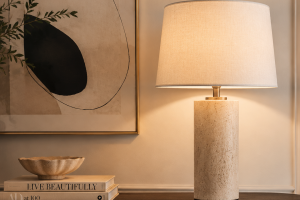
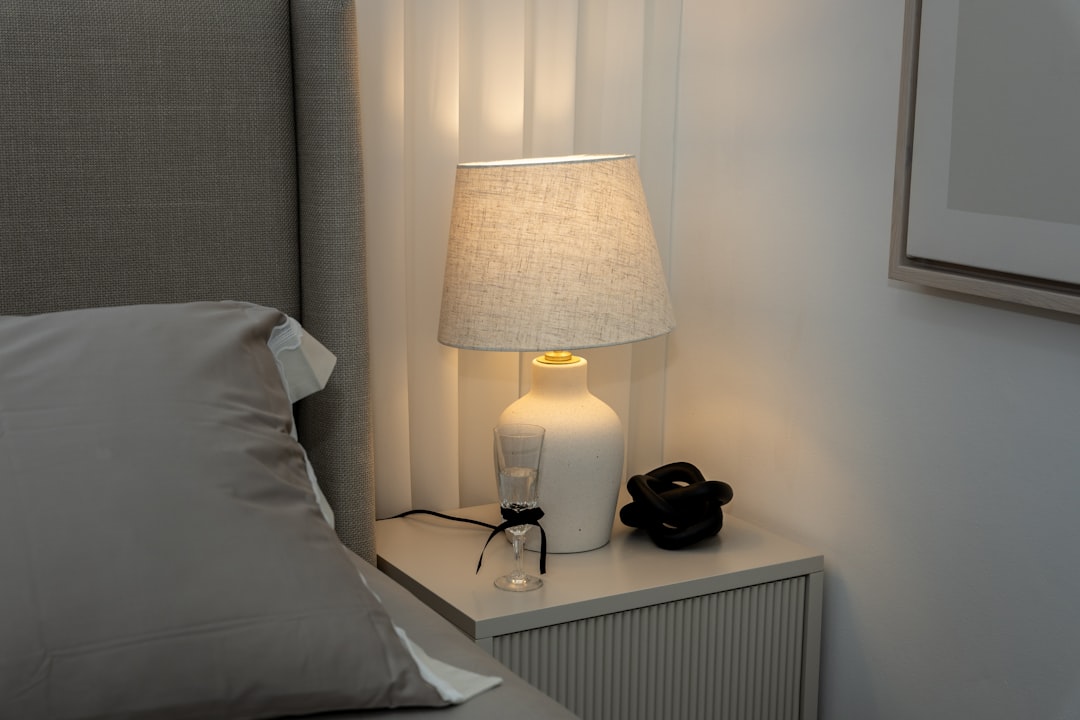
Chances are, if you’re looking for an “Elegant Ceramic Bedside Lamp with Linen Shade,” you’re after a specific blend of aesthetics and functionality. Simply put, this type of lamp offers a classic, understated beauty that complements a variety of room styles while providing soft, diffused light perfect for bedrooms. It’s a choice that prioritizes coziness and timeless design over flashy trends.
Ceramic, as a material for lamp bases, has a charm all its own. It’s not just about what it looks like; it’s about how it feels and how it endures.
A Nod to Craftsmanship
Unlike mass-produced plastic or metal, ceramic often carries a sense of artisanal creation. Even if manufactured in bulk, the inherent variations in glazing and firing mean no two ceramic pieces are ever exactly identical. This subtle individuality contributes to its elegant appeal. When you look at a ceramic lamp, you’re often seeing the results of careful shaping and finishing.
Durability and Stability
Ceramic is a surprisingly robust material. It’s naturally heavy, which makes for a very stable lamp base – a major plus for a bedside table where accidental bumps are a risk. You won’t have to worry about knocking it over every time you reach for your phone. This inherent weight also contributes to its feeling of quality and substance.
Versatility in Design
From smooth, minimalist forms to intricately textured patterns, ceramic can take on a vast array of shapes and finishes. This adaptability allows designers to create lamps that fit seamlessly into diverse interior aesthetics, whether it’s a sleek modern loft or a rustic farmhouse bedroom. The glaze itself offers another layer of design flexibility, ranging from matte to high-gloss, and in virtually any color imaginable.
The Linen Shade: A Soft Touch
While the ceramic base provides the structure and much of the visual weight, it’s the linen shade that truly defines the quality and diffusion of light Depojeans.
Light Diffusion Done Right
Linen is an ideal material for lamp shades because of its natural fibers. It expertly diffuses light, preventing harsh glare and creating a soft, warm glow that’s incredibly inviting. This is crucial for a bedside lamp, where the primary goal is often to create a relaxing atmosphere rather than bright task lighting. The light filters through the weave of the fabric, scattering gently into the room.
Texture and Warmth
Beyond diffusion, linen shades add a tactile quality to the lamp. The slight texture of the fabric introduces an organic element that can soften a room, making it feel more lived-in and comfortable. This natural texture also adds a layer of depth compared to smoother, more synthetic materials, giving the lamp a richer, more expensive feel without being ostentatious. The warm undertones often present in natural linen colors also contribute to a cozy ambiance.
Easy Maintenance and Longevity
Linen is a durable fabric that, with proper care, can last for years. Most linen shades can be gently dusted or spot-cleaned, making them relatively low-maintenance. Their natural fibers are also less prone to static electricity than synthetic alternatives, meaning they tend to attract less dust in the first place. This longevity is another reason why linen shades are a practical choice for a lamp you’ll be using daily.
Design Considerations for Your Bedroom
Choosing the right bedside lamp involves more than just liking how it looks. It’s about finding a piece that fits seamlessly into your bedroom’s practical and aesthetic ecosystem.
Scale and Proportion
This is a big one. A lamp that’s too tall or too short, or a shade that’s too wide or too narrow for your bedside table and bed, can throw off the entire balance of your room.
Matching Table Height
Generally, the bottom of the lamp shade should be roughly level with your shoulder when you’re sitting up in bed. This position helps prevent direct glare into your eyes while also casting light effectively onto your book or device. If your table is low, you might need a taller lamp; if it’s high, a shorter one.
Bed Height and Headboard
Consider the height of your bed and headboard. A very tall headboard might dwarf a small lamp, while a massive lamp could overpower a minimalist bed frame. Aim for visual harmony, where the lamp complements rather than competes with your bed. A good rule of thumb is that the lamp’s total height should not exceed 1.5 times the height of your nightstand, and the shade should ideally be no wider than the nightstand itself.
Room Size and Space
In a smaller bedroom, a more slender ceramic base and a shallower shade might be preferable to avoid making the space feel cramped. In a larger room, you might have more leeway for a wider, more substantial lamp that can hold its own visually.
Color and Finish Harmony
The ceramic base and linen shade offer a wide palette for integrating the lamp into your existing decor.
Base Color Options
Ceramic bases come in an astonishing array of colors. Neutral tones like white, cream, grey, or black are incredibly versatile and will blend with almost any decor. For a pop of color, you might find bases in soft blues, greens, or earthy terracotta hues. Consider whether you want the lamp to be a subtle accent or a more prominent focal point. Matte finishes tend to offer a more contemporary, understated look, while glossy glazes can add a touch of traditional elegance or a modern sheen.
Shade Color and Weave
While “linen” often conjures images of natural beige, linen shades come in various off-whites, creams, and even muted grays or blues. The specific weave of the fabric also impacts its appearance and light diffusion. A looser weave might allow more light through and appear softer, while a tighter weave can look more structured and provide a more focused light. Match the shade’s undertone to other textiles in your room for a cohesive feel.
Switch Types and Functionality
Don’t overlook the practical details. The type of switch can significantly impact your nightly routine.
On-Lamp Switches
Many ceramic bedside lamps feature a rotary switch on the lamp’s socket or base. These are simple and effective, requiring you to reach for the lamp to turn it on or off. They are a classic choice and generally very reliable.
Cord Switches
An in-line switch on the power cord offers convenience, allowing you to turn the lamp on/off without reaching up to the socket. This is particularly useful if the lamp is positioned snugly against a wall or if you have limited mobility. Ensure the cord length is adequate for your wall outlet.
Touch Lamps
For ultimate convenience, some ceramic bases are designed as touch lamps, turning on or off (and often dimming) with a simple tap on the base. This can be fantastic for those groggy moments in the middle of the night. However, it’s worth noting that touch lamps can sometimes be more prone to accidental activation.
Dimmer Compatibility
A major plus for any bedside lamp is dimmer functionality. Whether built-in or compatible with a dimmable bulb, being able to adjust the light intensity is invaluable for creating the perfect atmosphere – bright enough for reading, dim enough for winding down. Always check if the lamp and your chosen bulb are dimmer-compatible before purchasing a separate dimmer switch.
Lighting Your Sanctuary: Bulb Choices
The bulb you choose for your elegant ceramic bedside lamp is just as important as the lamp itself. It dictates the quality, color, and intensity of the light in your most personal space.
The Warmth of LED
For a bedside lamp, LED bulbs are generally the best choice. They are energy-efficient, long-lasting, and, crucially, available in a wide range of “color temperatures.”
Color Temperature (Kelvin)
This is perhaps the most important aspect for a bedside lamp. You’re looking for warm light, typically in the range of 2700K to 3000K (Kelvin). This mimics the soft glow of incandescent bulbs, creating a cozy, relaxing environment that’s conducive to sleep preparation. Avoid cooler temperatures (3500K and above) which can feel harsh and stimulate alertness, disrupting your natural sleep cycle.
Brightness (Lumens)
Forget wattage; lumens are what you need to look at for brightness. For a bedside lamp, you likely don’t need a super-bright bulb. Somewhere between 400-800 lumens (equivalent to a 40W-60W incandescent) is usually sufficient for reading or general ambient light. If you opt for a dimmable bulb, you have even more flexibility.
Dimmable vs. Non-Dimmable
If your lamp has a dimmer switch or you plan to use one, ensure your LED bulb is explicitly labeled as “dimmable.” Using a non-dimmable LED bulb with a dimmer can lead to flickering, buzzing, or premature bulb failure.
Smart Bulb Integration
For tech-savvy individuals, smart bulbs can take your bedside lighting to the next level.
App Control and Scheduling
Smart bulbs allow you to control your lamp via your smartphone or voice assistant. You can switch it on/off, change brightness, and even adjust the color temperature all from your bed. Many also allow for scheduling, so your light can gently dim as you get closer to bedtime or gradually brighten in the morning.
Tunable White Options
Some smart bulbs offer “tunable white,” allowing you to shift the color temperature from very warm (e.g., 2200K) to cooler (e.g., 5000K) throughout the day. This can be great for aligning your lighting with your circadian rhythm, fostering relaxation in the evening and gentle alertness in the morning.
Scene Setting
Smart bulbs often allow you to create “scenes” – predefined settings for brightness and color temperature for different activities (e.g., “Reading,” “Relax,” “Night Light”). This simplifies your lighting control and enhances the user experience.
Placement and Pairing: Beyond the Lamp
Once you’ve picked out the perfect lamp, how you place it and what you put around it can elevate its impact (or detract from it).
Strategic Positioning
A bedside lamp isn’t just decoration; it’s a functional tool.
The Reading Triangle
When sitting up in bed, the light should ideally come from above your shoulder, not directly in front of your eyes. Position the lamp so its shade directs light down onto your book or device without casting a shadow from your head or shoulder. This often means placing it slightly behind and to the side of where you’d be reading.
Avoiding Glare
Ensure the bottom rim of the shade is below your eye level when you’re lying down. This prevents the harsh glare of the bare bulb from interrupting your rest or causing discomfort. The linen shade will do a lot of the work here, but placement is still key.
Nightstand Real Estate
Consider what else is on your nightstand. Does the lamp’s footprint leave enough space for your book, phone, water glass, and perhaps a small alarm clock? If space is tight, a lamp with a smaller base might be more practical, or consider wall-mounted bedside lighting as an alternative.
Pairing with Companions
Your bedside table is a curated vignette. The lamp should play nicely with other elements.
Symmetry vs. Asymmetry
If you have two nightstands, decide if you want matching lamps for a symmetrical, balanced look, or if you prefer two different lamps that complement each other for a more eclectic feel. Both approaches can be elegant, depending on your overall room design.
Themed Styling
If your ceramic lamp has a particular aesthetic (e.g., Japanese wabi-sabi, Scandinavian minimalist, Mediterranean rustic), consider pairing it with objects that share that theme. A small ceramic dish, a textured coaster, or a simple houseplant in a matching pot can enhance the overall look and create a cohesive storytelling moment.
Reflective Surfaces
A small mirror or a piece of art with a reflective frame placed near the lamp can help bounce light around the room, making the space feel brighter and more open. Just be mindful of direct reflections that could be jarring.
An elegant ceramic bedside lamp with a linen shade is more than just a light source; it’s a considered design choice that brings warmth, style, and essential function to your sanctuary. By paying attention to the material qualities, design details, and practical aspects of lighting, you can select a piece that truly enhances your bedroom environment for years to come.