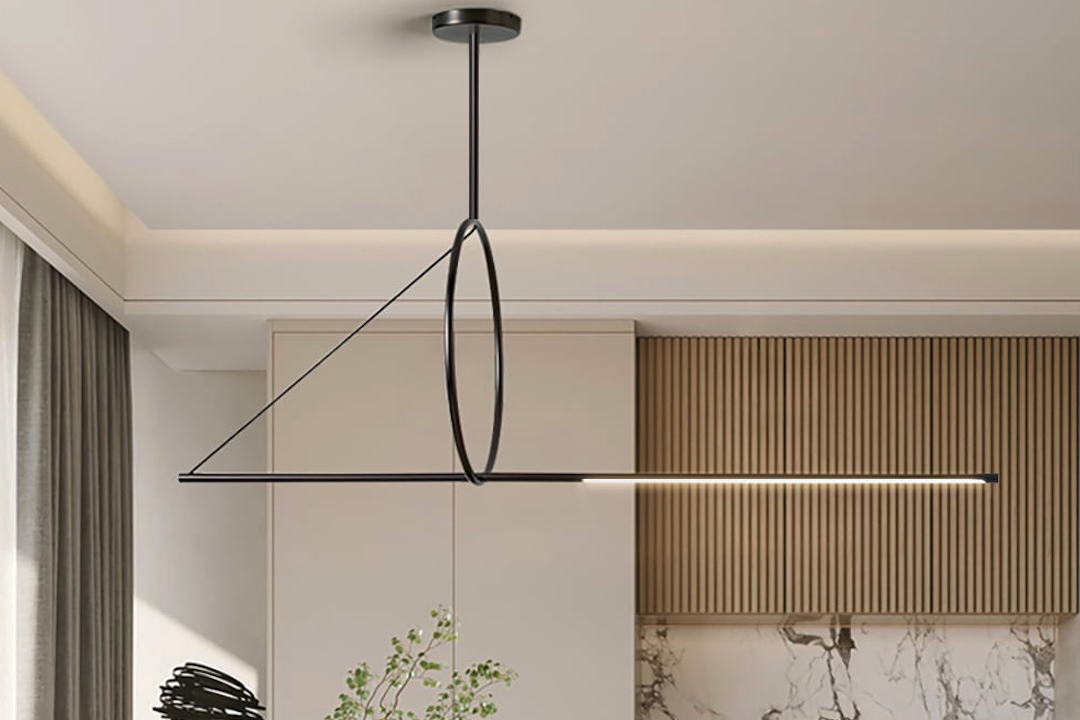
Want to give your dining room a fresh look without a full remodel? A geometric black linear chandelier might be just what you’re looking for. It’s a sleek, modern statement piece that can totally transform your space, offering both style and practical illumination.
The Allure of Geometric Black Linear Chandeliers
This style of chandelier Vopdesign has gained serious traction for good reason. It blends the clean lines of geometric design with the sophistication of a linear form and the timelessness of black. This combination creates a versatile fixture that can enhance a wide range of interior styles, from minimalist and industrial to something a bit more eclectic.
If you’re looking to update your dining room’s aesthetic, a geometric black linear chandelier offers a significant impact with a focused design. It’s not about overwhelming the space with ornate details, but rather about making a deliberate, stylish statement.
Why Go Black?
Black is a classic for a reason. It’s incredibly versatile, making it a safe yet impactful choice for any room. In a dining room, black lighting fixtures can:
- Anchor the Space: A black chandelier acts as a central visual anchor, drawing the eye and grounding the room’s design.
- Add Drama: Black inherently possesses a certain gravitas, and a well-placed fixture can inject a subtle yet noticeable sense of drama.
- Contrast and Define: Against lighter walls or furniture, a black chandelier creates a striking contrast that helps define the dining area.
What Makes it “Geometric” and “Linear”?
- Geometric: This refers to the shapes involved. Think sharp angles, clean lines, squares, rectangles, hexagons, or even abstract arrangements of these forms. It’s about creating a structured, thoughtful pattern.
- Linear: This means the fixture is designed to be elongated, typically spanning across a rectangular or oval dining table rather than being a single, central focal point like a traditional chandelier. This length is key to its modern appeal and its ability to illuminate a broader area.
Transforming Your Dining Space
The right lighting is crucial for setting the mood in a dining room. A geometric black linear chandelier can elevate your space from functional to fabulous.
The Impact on Atmosphere
Beyond just providing light, your chandelier influences the overall feel of your dining room.
Creating Ambiance for Meals
The type of light emitted and the way it’s distributed significantly affect the mealtime experience.
- Soft, Even Illumination: Many linear chandeliers are designed to spread light across the table, reducing shadows and ensuring everyone at the table is well-lit without being blinded. This can make conversations feel more intimate and approachable.
- Task Lighting for Details: The focused nature of linear lighting can also highlight the food and tableware, adding a touch of elegance to your dining presentations.
- Mood Setting: Consider fixtures with dimmable capabilities. This allows you to adjust the light from bright and functional for everyday meals to soft and subdued for more formal dinners or romantic evenings.
Setting a Modern Tone
The geometric form inherently speaks to modern design sensibilities.
- Clean Aesthetics: If your current decor leans towards minimalist, modern, or even industrial styles, a geometric black linear chandelier will blend in seamlessly, reinforcing those design principles.
- Visual Interest: Even in a sparsely decorated room, a striking geometric fixture adds a significant point of visual interest without cluttering the space.
Enhancing Table Presentation
The chandelier isn’t just about lighting the room; it’s also about how it interacts with your dining table and chairs.
Scale and Proportion
Getting the size right is key to making your chandelier work for your space.
- Table Length: A general guideline is that the length of your chandelier should be about half to two-thirds the length of your dining table. This ensures it looks proportional and doesn’t overpower or get lost.
- Room Size: Consider the overall dimensions of your dining room. A very large chandelier in a small room can feel overwhelming, while a tiny one in a grand space might look insignificant.
- Height Considerations: The bottom of the chandelier should typically hang between 30 to 36 inches above the tabletop. This provides adequate clearance for people to move around without bumping their heads, while still allowing the light to effectively illuminate the table. If you have a particularly high ceiling, you might need to adjust this measurement upwards.
Style Harmony
Matching the chandelier’s style to your table and chairs is important for a cohesive look.
- Modern Tables: A sleek, glass-topped or minimalist wooden table pairs exceptionally well with the clean lines of a geometric black linear chandelier.
- Traditional Forms: Surprisingly, a geometric black linear chandelier can also add a modern twist to a more traditional or rustic wooden table. The contrast can be quite striking and sophisticated.
- Chair Design: Consider the lines of your chairs. If they have strong, geometric shapes, the chandelier will complement them. If they are softer, the chandelier can provide a stronger visual framework.
Choosing the Right Geometric Black Linear Chandelier
With so many options available, selecting the perfect fixture requires a bit of thought about your specific needs and style.
Design Variations
The term “geometric black linear chandelier” covers a wide spectrum of designs.
Minimalist Straight Lines
These are often the simplest forms, featuring one or more straight bars with integrated LED lights or sockets for bulbs. They are perfect for achieving a very clean, unobtrusive modern look.
- Single Bar Style: A single, slender bar suspended horizontally. This is about as minimalist as you can get.
- Multiple Parallel Bars: Two or more bars arranged parallel to each other, often with a slight offset or different lengths, adding a subtle complexity.
- Cage Designs: Open geometric frames, often square or rectangular, that enclose the light source. These can offer a bit more visual texture.
Intricate Geometric Frameworks
These designs go beyond simple lines to incorporate more complex geometric shapes.
- Interlocking Shapes: Think of designs where multiple squares, rectangles, or even hexagonal shapes are interconnected to form a broader linear structure.
- Open Cubic or Rectangular Structures: These might resemble stacked boxes or abstract sculptures, all oriented along a linear axis.
- Abstract Geometric Compositions: Some designs might not adhere to perfectly recognizable shapes but use geometric principles to create a dynamic, artistic arrangement along the linear form.
Material and Finish Considerations
While you’ve decided on black, there are nuances in the finish that can affect the overall look.
Matte vs. Glossy Black
The finish of the black can dramatically alter the fixture’s impact.
- Matte Black: Offers a subtle, sophisticated look. It absorbs light rather than reflecting it, giving it a more subdued and modern feel. It’s also less prone to showing fingerprints.
- Glossy Black: Reflects more light, creating a bolder statement. It can add a touch of art deco flair and feels more luxurious, but it can also be more susceptible to showing smudges.
Accents and Contrasts
Some fixtures incorporate other materials or finishes for added detail.
- Brushed Nickel or Chrome Accents: Small touches of metallic hardware can break up the black and add a refined glimmer.
- Wood Elements: Integrated wooden components can soften the industrial feel of black and add warmth, especially in more Scandinavian-inspired or mid-century modern designs.
- Glass or Crystal Details: While less common in strictly geometric designs, some may incorporate clear or frosted glass shades or subtle crystal accents for a touch of sparkle.
Lighting Technology
The type of lighting technology used is crucial for both energy efficiency and the quality of light.
LED vs. Traditional Bulbs
Most modern linear chandeliers utilize LED technology.
- LED Integrated: Many fixtures have LEDs built directly into the fixture. This often allows for slimmer profiles and more unique designs.
- Energy Efficiency: LEDs consume significantly less energy than traditional incandescent bulbs.
- Longevity: They have a much longer lifespan, meaning less frequent replacements.
- Design Flexibility: Their small size allows for more intricate and streamlined designs.
- Color Temperature: LEDs are available in various color temperatures, from warm white (around 2700K) to cool white (5000K+). For a dining room, a warm white is generally preferred for creating a cozy atmosphere.
- Bulb Sockets (E.g., E26, E12): Some linear chandeliers are designed to accept standard bulbs, giving you the flexibility to choose your preferred bulb type and wattage (within the fixture’s limits).
- Customization: You can experiment with different bulb shapes (e.g., Edison bulbs for an industrial look) or select smart bulbs for advanced control.
- Easier Replacement: If a bulb burns out, it’s a simple matter of screwing in a new one.
Dimmability
This is a must-have feature for any dining room lighting.
- Compatibility: Ensure the fixture and the bulbs (if not integrated) are compatible with your existing dimmer switch. If you don’t have a dimmer, consider installing one at the same time.
- Adjusting Ambiance: The ability to dim allows you to transition from bright, functional light for daytime activities or meal prep to a soft, inviting glow for evening dining.
Installation and Placement
Getting the installation and positioning right is as important as choosing the fixture itself.
Professional vs. DIY Installation
This is a decision that depends on your comfort level with electrical work.
- When to Call a Professional: If you’re not experienced with electrical wiring, have old wiring, or are unsure about any step, it’s always best to hire a qualified electrician. Incorrect installation can be a safety hazard.
- DIY Possibilities: If you’re comfortable with basic wiring and have a straightforward installation point (e.g., an existing junction box wired correctly), a DIY installation might be feasible. Always follow the manufacturer’s instructions carefully and ensure the power is off at the breaker before you begin.
Placement Above the Table
The correct positioning is crucial for both aesthetics and function.
Centering the Fixture
The most common and visually effective placement is to center the chandelier directly over the dining table.
- Table Centerline: Imagine a line running down the exact center of your table, both lengthways and widthways. The chandelier should be positioned at this intersection.
- Room Balance: This centering ensures visual balance within the room and that the light is distributed evenly across the primary use area.
Droop Height Guidelines
The hanging height influences the light’s effectiveness and presence.
- General Rule: As mentioned earlier, aim for 30 to 36 inches from the tabletop to the bottom of the chandelier.
- Visual Hierarchy: The chandelier should be a visible element but not obstruct conversation or views across the table. You should be able to see the faces of the people sitting opposite you.
- High Ceilings: If you have ceilings over 10 feet, you may need to extend the chain or suspension cables to achieve the appropriate height. Conversely, for lower ceilings, you might need shorter suspension options.
Electrical Considerations
Ensure you have the right setup for your new fixture.
Junction Box Requirements
The fixture needs to be supported by a securely mounted electrical junction box.
- Weight Capacity: Ensure the junction box is rated to support the weight of your chosen chandelier. Most standard boxes are sufficient for linear chandeliers, but it’s good to check.
- Location: The junction box should be precisely where you want the chandelier to hang, ideally centered over the table and the wiring should lead to it.
Dimmer Switch Integration
If you plan to use a dimmer, ensure compatibility.
- Triac Dimmers: Most LEDs are dimmable using TRIAC (leading or trailing edge) dimmers. Always check the fixture’s specifications to confirm compatibility.
- Manufacturer Recommendations: Sometimes, specific dimmer brands are recommended by the chandelier manufacturer for optimal performance.
Integrating with Your Dining Room Decor
A geometric black linear chandelier is versatile, but understanding how it fits with your existing style is key.
Complementing Different Design Styles
This fixture isn’t limited to one aesthetic.
- Modern & Contemporary: This is the most natural fit. The clean lines and geometric forms enhance these styles beautifully. Pair with minimalist furniture, sleek surfaces, and a neutral color palette.
- Industrial: The black finish and often metal construction lend themselves well to industrial aesthetics. Combine with exposed brick, raw wood, and metal accents.
- Mid-Century Modern: While typically associated with warmer tones, a black linear chandelier can act as a striking modern accent piece against classic mid-century furniture, adding a contemporary edge.
- Transitional: If your decor is a mix of traditional and modern elements, a geometric black linear chandelier can bridge the gap. It adds a touch of contemporary design to a more classic setting.
- Minimalist: The focus on form and clean lines makes it ideal for minimalist spaces where every element is intentional.
Color Palette and Material Pairings
Consider how the chandelier interacts with your room’s colors and materials.
- Monochromatic Schemes: In an all-black or predominantly black dining room, a black chandelier can recede and become part of the overall atmosphere, or its geometric shape can provide subtle definition.
- High Contrast: Against white walls or furniture, a black chandelier makes a bold statement. This is a classic and effective approach for contemporary and modern rooms.
- Warm Neutrals: Pairing a black fixture with beige, cream, or grey tones can create a sophisticated and balanced look.
- Wood Tones: The black of the chandelier can beautifully complement various wood finishes, from light oak to dark walnut, adding a grounding element to the room.
- Metallic Accents: If your room has silver, brass, or gold accents, ensure the black chandelier complements them. Some fixtures have subtle metallic details that can tie into these elements.
Styling Tips for Maximum Impact
Small touches can make a big difference in how the chandelier elevates your space.
- Table Runner: A simple table runner can draw the eye towards the table and the light.
- Centerpiece: A well-chosen centerpiece that echoes the geometric theme (e.g., a sculptural vase) or provides a contrasting organic element can enhance the visual story.
- Mirror Placement: A strategically placed mirror can reflect the chandelier’s glow, making the room feel larger and brighter.
- Wall Art: Consider artwork that either complements the geometric lines of the chandelier or provides a soft, contrasting aesthetic.
Maintaining Your Geometric Black Linear Chandelier
Keeping your fixture looking its best is straightforward with a few practices.
Cleaning and Care
The materials and finish will dictate the best cleaning methods.
- Dusting: Regular dusting with a soft, dry microfiber cloth is essential. This prevents dust buildup from becoming ground-in grime.
- Fingerprints (Glossy Finishes): For glossy black finishes, a glass cleaner or a slightly damp cloth (followed by a dry buffing) can remove fingerprints. Be sure the cleaner is suitable for the material.
- Matte Black Finishes: For matte surfaces, avoid harsh chemicals or abrasive cleaners that can dull or scratch the finish. A soft, dry cloth is usually sufficient. For stubborn marks, a slightly damp cloth with plain water, followed by immediate drying, is often best.
- Shades or Diffusers: If your chandelier has glass or acrylic shades, follow the manufacturer’s recommendations. Most can be cleaned with a mild soap and water solution, rinsed, and dried thoroughly.
Bulb Replacement (if applicable)
If your chandelier uses replaceable bulbs, this is a simple maintenance task.
- Safety First: Always ensure the power to the fixture is turned off at the breaker before attempting to change a bulb.
- Accessing Bulbs: Depending on the design, you might need to carefully remove a glass shade, a screw-on cap, or an internal frame to access the bulb.
- Type of Bulb: Ensure you use the correct type and wattage of bulb as specified by the chandelier manufacturer to avoid damaging the fixture or causing overheating.
Checking Connections and Wiring
While not a frequent task, it’s good practice to be aware of this.
- Professional Check-ups: If you notice any flickering, buzzing, or signs of wear and tear on the wiring, it’s a good idea to have a qualified electrician inspect the fixture and its connections periodically.
- Loose Components: Occasionally check that any screws or mounting hardware appear secure, though this is rarely an issue with quality fixtures.
By thoughtfully selecting and installing a geometric black linear chandelier, you can achieve a dining room that feels both updated and uniquely yours, a space that’s stylish, functional, and ready for many memorable meals to come.