Modern interior lighting design often seeks to balance functionality with aesthetics, and in many contemporary spaces, the wall serves as a critical canvas for this endeavor. Minimal wall solutions for lighting represent a significant trend, shifting away from traditional, obtrusive fixtures towards integrated, subtle, and often adaptable illumination strategies. This approach prioritizes clean lines, efficient use of space, and a harmonious integration of light into the architectural fabric. Rather than placing lamps like distinct furniture pieces, minimal wall lighting aims to make the light itself the focal point, or to disappear entirely, leaving only its effect.
The effectiveness of minimal wall lighting lies in its ability to define space, enhance mood, and highlight architectural features without cluttering the visual field. It’s about letting the light Xlightings do the talking, so to speak, rather than the fixture shouting for attention. This approach is particularly relevant in smaller spaces where visual volume is at a premium, or in minimalist environments where every element is carefully considered for its contribution to the overall design. The principles guiding these solutions often stem from a desire for order, a preference for understated elegance, and an understanding of how light shapes perception.
The Evolutionary Path of Wall Illumination
Historically, wall illumination was primarily functional. Torches, candles, and later oil lamps mounted on walls provided essential light for visibility. These were often decorative, with elaborate sconces, but their primary purpose was pragmatic. The advent of electricity brought about a revolution, allowing for more controlled and varied forms of illumination. Early electric wall sconces, however, often mirrored their predecessors in design, aiming to be decorative objects in themselves. Think of ornate brass or wrought iron fixtures casting pools of light.
The mid-20th century saw a burgeoning interest in modernist design, which began to question the inherent decorative nature of lighting fixtures. Designers started to explore how light could be integrated directly into the architecture or how fixtures could become more sculptural, yet still minimal. This period laid the groundwork for what we now understand as minimal wall lighting. It was a move from the fixture as an object to the fixture as a conduit for light, or in some cases, an architectural element that emits light.
The digital age and advancements in LED technology have accelerated this evolution. LEDs offer unprecedented flexibility in terms of size, shape, color temperature, and control. This has allowed designers to craft lighting solutions that are virtually invisible, precisely directed, and highly energy-efficient, cementing the place of minimal wall solutions in contemporary interiors. Imagine a wall that breathes light, rather than a lamp that sits against it.
Core Principles of Minimal Wall Lighting
At its heart, minimal wall lighting adheres to a set of guiding principles that prioritize subtlety, integration, and purpose. These are not arbitrary choices but deliberate strategies employed to achieve a desired atmospheric and functional outcome.
Focus on Integration
The most distinguishing feature of minimal wall lighting is its commitment to integration. This means that the lighting is not simply an add-on but a considered part of the wall’s construction or its covering.
Recessed Solutions
Recessed lighting is a cornerstone of minimal wall design. Here, the light source and its housing are embedded within the wall cavity, appearing flush with the surface.
- Wall Washers: These fixtures are designed to emit a uniform, broad spread of light downwards or upwards along the wall. They are excellent for highlighting artwork, creating a sense of depth, or providing ambient light in a corridor. The light glides down the wall like a gentle cascade. The key is a carefully designed reflector or lens that spreads the light evenly, avoiding hot spots or harsh shadows. The housing is typically small and unobtrusive, often a simple cylinder or rectangle. Architectural detailing around the recess can further contribute to the seamless integration.
- Accent Lights: For focused illumination on specific features, recessed accent lights are preferred. These fixtures, often featuring adjustable heads, allow for precise aiming. Unlike wall washers, their beam is more concentrated, suitable for spotlights on sculptures or architectural details. The luminaire itself often disappears into a ceiling or a strategically placed recess in the wall. The effect is akin to a spotlight appearing out of nowhere, isolating and elevating the chosen object.
- Uplighters and Downlighters: Recessed fixtures positioned at the top or bottom of a wall and directed upwards or downwards are excellent for creating indirect lighting. Uplighters cast a soft glow upwards, making ceilings appear higher and creating a warm, diffused ambiance. Downlighters serve a similar purpose at the base of the wall. This strategy is particularly effective in bedrooms or living areas where a relaxed atmosphere is desired. It’s like drawing a halo around the room’s edges, subtly defining its boundaries.
Surface-Mounted Minimalist Fixtures
While recessing offers the ultimate in invisibility, some surface-mounted fixtures can also embody minimal principles, provided their design is exceptionally understated.
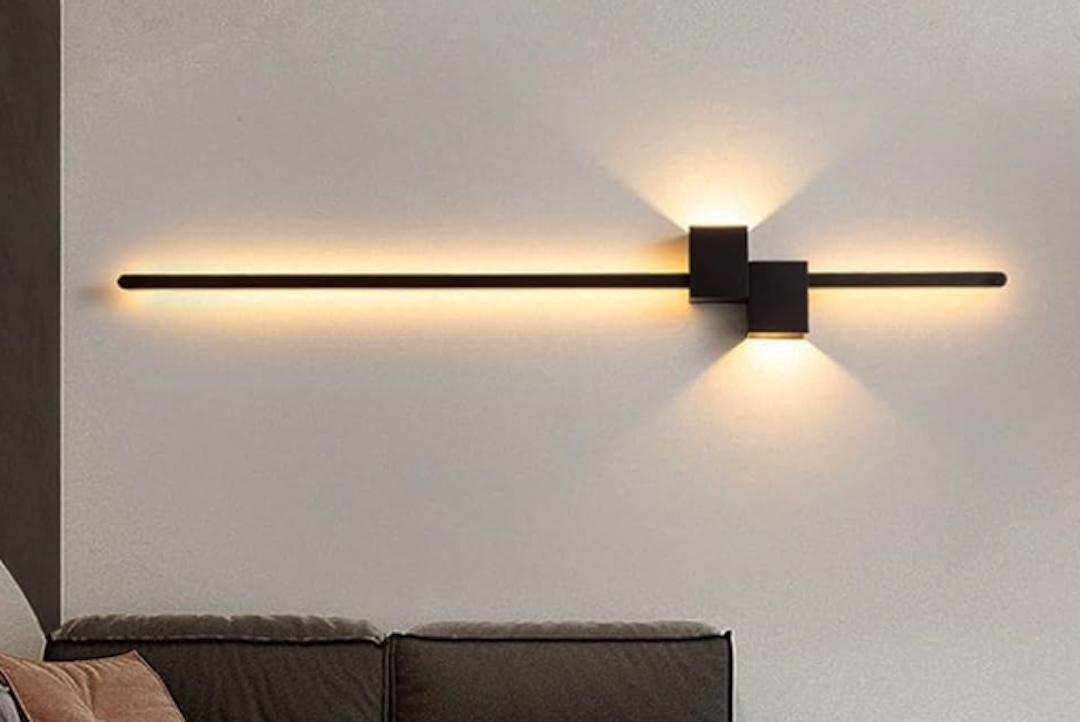
- Linear Profiles: Slim, linear LED profiles, often made of aluminum, can be mounted directly onto the wall surface, or more effectively, integrated into a channel that is flush with the wall. These can be used to create continuous lines of light along the base, ceiling, or as vertical elements. Their minimalist form factor ensures they don’t dominate the space. The light emitted can be direct or diffused through a frosted cover, creating a sleek, glowing line. Think of them as delicate brushstrokes of light on the wall’s canvas.
- Cylindrical or Rectangular Sconces: When surface-mounted, sconces in minimal designs are crucial. These are typically very slender, often just a rod or a simple rectangle, with the light source concealed. They might emit light upwards, downwards, or in both directions, creating subtle patterns of illumination. The focus is on the light they project, not their physical presence. These are the minimalists of the decorative world, offering function with restraint.
Emphasis on Functionality and Purpose
Minimal wall lighting is not just about looking good; it serves specific functional roles within an interior. The choice of fixture and its placement is dictated by what the light needs to achieve.
Ambient Illumination
For overall mood and comfortable visibility, ambient lighting is key. Minimal wall solutions excel at providing a soft, pervasive glow.
- Indirect Lighting: Techniques like wall washing and uplighting/downlighting primarily serve as ambient illumination. By bouncing light off surfaces, it avoids harshness and creates a more diffused, comfortable environment. This is like stepping into a soft fog of light.
- Integrated Cove Lighting: Though often associated with ceilings, cove lighting can also be integrated into wall features. These are concealed channels that house light sources, directing light upwards to wash a wall or ceiling. They create a seamless, ethereal glow without any visible fixture.
Task Lighting
In specific areas requiring focused light for activities, minimal wall solutions provide targeted illumination that remains unobtrusive.
- Reading Lights: Adjustable, recessed or minimally mounted linear lights above beds or seating areas can provide excellent reading light without cluttering bedside tables or sofas. The light is precisely where it’s needed, like a focused beam on a page.
- Desk or Countertop Illumination: In kitchens or home offices, slim, recessed linear lights or discreetly placed wall-mounted LEDs can illuminate workspaces effectively without the need for bulky desk lamps.
Accent and Decorative Lighting
Beyond basic visibility, minimal wall lighting can be used to enhance the visual appeal of a space.
- Highlighting Textures: Wall-washing techniques can dramatically emphasize the texture of materials like brick, stone, or textured paint. The play of light and shadow reveals the surface’s intricate details.
- Art Illumination: As mentioned with accent lights, minimal fixtures are ideal for drawing attention to artwork, turning a piece into a focal point through carefully directed light.
- Creating Atmosphere: Subtle uplighting or strategically placed linear lights can sculpt the space, creating drama, warmth, or a sense of expansiveness.
Materiality and Form
The materials and forms used in minimal wall lighting are critical to their understated presence.
Discreet Materials
The materials employed are often chosen for their ability to blend in or to have a subtle, premium feel.
- Anodized Aluminum: This is a common choice for linear profiles and recessed housings due to its durability, sleek finish, and ability to be extruded into precise shapes. It often comes in finishes like matte black, white, or natural silver, which blend seamlessly with many wall colors.
- Plaster or Gypsum: For truly integrated solutions, fixtures designed to be plastered over or covered with gypsum board allow the light to appear as if it’s emanating directly from the wall itself. This creates an almost magical, seamless effect.
- Frosted or Diffused Lenses: These are crucial for softening the light of LEDs, preventing glare and creating a more uniform luminescence. They are often made of polycarbonate or acrylic.
Geometric Simplicity
The forms are almost invariably geometric and unadorned.
- Rectangles, Squares, and Lines: These shapes are prevalent, reflecting the clean lines of modern architecture. They integrate easily into grid systems or architectural details.
- Absence of Ornamentation: The defining characteristic is the absence of decorative elements. There are no carvings, elaborate finials, or unnecessary embellishments. The beauty lies in the purity of the form and the quality of the light.
Emerging Technologies and Their Impact
The evolution of minimal wall lighting is intrinsically linked to technological advancements, particularly in the realm of solid-state lighting.
The LED Revolution
Light Emitting Diodes (LEDs) have been the primary catalyst for the widespread adoption of minimal wall lighting solutions. Their inherent characteristics make them ideal for discreet and integrated applications.
Size and Flexibility
LEDs are incredibly small, allowing them to be integrated into extremely thin profiles or tiny recessed housings. This miniaturization is fundamental to achieving a minimal aesthetic. They can be bent into curves or arranged in complex patterns when mounted in strips.
Energy Efficiency and Longevity
The high energy efficiency of LEDs means that smaller fixtures can produce ample light without generating excessive heat. Their long lifespan also reduces maintenance requirements, making them ideal for built-in applications where replacement can be difficult.
Controllability
Modern LED systems offer sophisticated control options, including dimming, color temperature adjustment, and even color changing. This allows users to fine-tune the mood and functionality of their lighting throughout the day or for different occasions.
Smart Lighting Systems
The integration of smart home technology further enhances the capabilities of minimal wall lighting.
Seamless Integration with Architecture
Smart sensors can detect occupancy, ambient light levels, and even the presence of individuals to adjust lighting automatically. This allows for dynamic and responsive lighting that enhances comfort and saves energy. For instance, lights might subtly dim as natural light increases during the day.
Personalization and Automation
Users can program personalized lighting scenes for various activities – from a bright, focused setting for work to a warm, dim ambiance for relaxation. This level of control is a hallmark of modern, sophisticated interior design, and minimal wall lighting is the perfect silent partner.
Design Considerations for Minimal Wall Lighting
Implementing minimal wall lighting effectively requires careful planning and attention to detail. It’s not simply a matter of picking a product; it’s about understanding how light interacts with space.
Understanding Light Quality
The “quality” of light refers to its characteristics beyond mere brightness.
Color Temperature (Kelvin)
The color temperature of the light emitted by LEDs significantly impacts the ambiance of a space. Warm white light (around 2700K-3000K) tends to be cozy and inviting, suitable for living areas and bedrooms. Cooler white light (4000K-5000K) is more energizing and closer to daylight, often preferred for kitchens and workspaces. Minimal wall solutions allow for precise control over this, enabling the creation of distinct moods with unseen sources.
Color Rendering Index (CRI)
CRI measures how accurately a light source reveals the true colors of objects. A high CRI (90+) is desirable for spaces where color accuracy is important, such as galleries, retail environments, or even in residential settings where artwork is displayed. Minimal fixtures, when incorporating high-CRI LEDs, ensure that the colors of the interior are represented faithfully.
Strategic Placement and Luminaire Design
The effectiveness of minimal wall lighting hinges on where it’s placed and how the luminaire itself is designed.
Avoiding Glare and Hotspots
One of the challenges with any lighting is preventing harsh glare or excessively bright spots. Minimal wall solutions often utilize diffusers or carefully engineered reflector systems to create a smooth, comfortable light distribution. For wall washing, the distance from the wall and the beam angle of the luminaire are critical. Too close, and you get a bright patch; too far, and the light doesn’t reach the desired area effectively.
Integrating with Architectural Elements
Minimal wall lighting can be most successful when it complements, rather than competes with, architectural features.
- Corners and Recesses: Utilizing the natural lines of corners and creating custom recesses can amplify the integrated nature of the lighting. This can make the light appear to flow organically from the structure itself.
- Furniture Integration: While this article focuses on wall solutions, it’s worth noting that minimal lighting strategies can extend to furniture. However, for walls, the aim is to create an effect that feels inherent to the building’s shell.
The Illusion of “No Fixture”
The ultimate goal of many minimal wall lighting designs is to achieve an effect where the light source is essentially invisible. This is the realm where the luminaire disappears, leaving only its luminous output. This can be achieved through:
- Ceiling Coves: While technically ceiling elements, integrated wall coves use the ceiling as a surface from which light is projected downwards onto the wall, creating a diffused, indirect effect.
- Floor-to-Ceiling Recesses: Designing a shallow recess from floor to ceiling that hides a continuous linear light source can create a dramatic vertical beam of light that emphasizes the height of the room.
- Illuminated Wall Panels: In more advanced applications, entire sections of wall can be designed to emit diffused light, creating a soft, ambient glow that acts as a primary light source.
Future Directions in Minimal Wall Lighting
The field of interior lighting, and specifically minimal wall solutions, is continuously evolving, driven by technological innovation and changing design philosophies.
Advanced Materials and Manufacturing
The development of new materials and more sophisticated manufacturing techniques will continue to push the boundaries of what’s possible.
Flexible and Bendable Light Sources
The increasing flexibility of LED technology will likely lead to more organic and custom lighting forms integrated into walls, moving beyond simple straight lines. Imagine light that gently follows the natural contours of a curved wall.
Self-Healing and Adaptable Materials
Research into materials that can integrate lighting elements directly into their structure, or even repair minor damage, could lead to lighting solutions that are even more seamlessly and permanently integrated into the building envelope.
Augmented Reality and Digital Integration
The intersection of physical space with digital information will also influence lighting design.
Context-Aware Lighting
Future minimal wall lighting systems may be able to respond to digital inputs, such as real-time weather data or the user’s calendar, adjusting light levels and color temperatures accordingly. Imagine lights subtly shifting to a brighter, more invigorating tone as a high-productivity block in your schedule begins.
Interactive and Dynamic Walls
The concept of the “smart wall” could see lighting become an integral part of dynamic displays, where light patterns and intensity can change to convey information or create immersive visual experiences, all while maintaining a minimal aesthetic when not actively engaged.
In conclusion, minimal wall lighting solutions represent a sophisticated approach to interior illumination that prioritizes subtlety, integration, and purpose. By leveraging advancements in LED technology and a deep understanding of design principles, these solutions transform walls from passive surfaces into active contributors to the atmosphere and functionality of a space. The trend is not merely about using fewer fixtures, but about using light itself with greater intelligence and artistry, creating environments that are both visually serene and functionally superior. The wall, once merely a backdrop, now becomes a canvas for carefully orchestrated light.